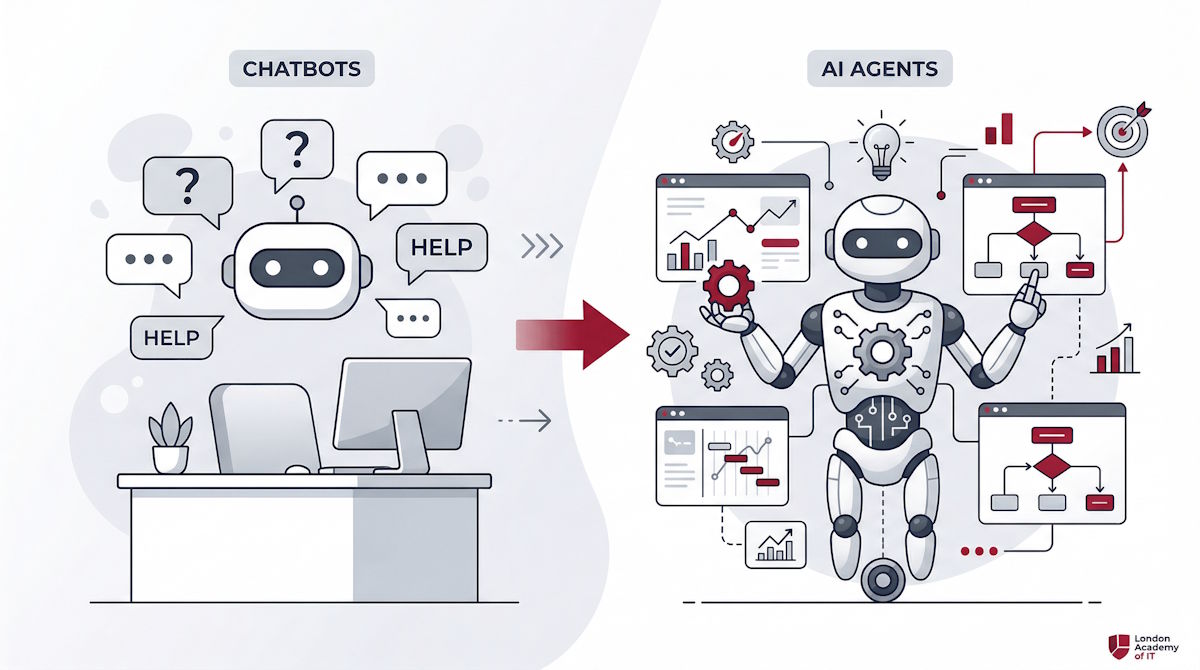
In recent years, the corporate world has been captivated by Generative AI. Large Language Models (LLMs) have fundamentally changed how we draft communications, summarise lengthy documents, and brainstorm creative concepts. However, for most organisations, these tools have remained "passive" assistants; they can discuss work with remarkable fluency, but they cannot actually perform it.
As we move through 2026, the technological frontier has shifted toward Agentic AI. This evolution represents a move away from chatbots that merely answer questions toward AI Agents that can execute multi-step workflows autonomously. For decision-makers across the financial, legal, and professional services sectors, understanding this shift is no longer a matter of technical curiosity; it is a strategic necessity.
What is Agentic AI?
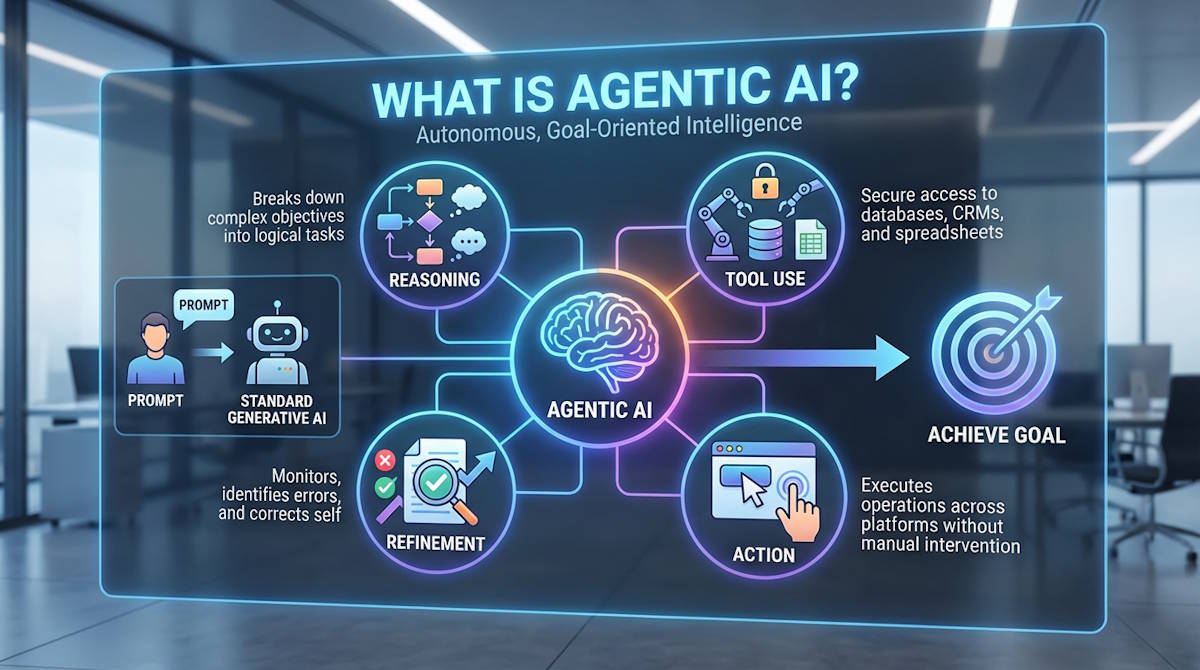
Unlike standard generative AI, which requires a human to provide a specific "prompt" for every single step, Agentic AI is designed to achieve a goal. An AI Agent possesses four distinct capabilities:
- Reasoning: It can break down a complex, high-level objective into a series of smaller, logical tasks.
- Tool Use: It can be granted secure access to an organisation’s SQL databases, CRM systems, or internal spreadsheets.
- Action: It can execute necessary operations across different software platforms without manual intervention.
- Refinement: It can monitor its own output, identify errors, and correct them before delivering a final result.
Why Global Organisations are Prioritising AI Agents
In a high-pressure professional landscape, the value of AI is moving beyond simple text generation. Agentic AI addresses three critical operational needs:
1. End-to-End Workflow Automation
While a traditional chatbot might draft a summary of a client meeting, an AI Agent can take that summary, update the project status in a management suite, email the relevant stakeholders with their specific action items, and cross-reference the discussion against existing compliance data, all in a single, autonomous flow.
2. Handling High-Volume Data Analysis
In data-heavy sectors such as Fintech, Insurance, and Logistics, the volume of information is often overwhelming. Agentic AI can be tasked with monitoring real-time data feeds, identifying anomalies, and immediately running a Python script to analyse the impact. It acts as a tireless analyst that works in the background, alerting human staff only when a critical decision is required.
3. Scaling Professional Expertise
Professional services often struggle with the "administrative burden" of client relationships. AI Agents can autonomously conduct initial due diligence, review thousands of pages of documentation for specific legal or financial risks, and flag only the most complex issues for a senior partner’s review.
The Foundation of an Agentic Strategy
Transitioning to an Agentic AI model requires more than a software subscription; it requires a robust data foundation. For an AI Agent to be effective, it needs access to clean, structured data and a workforce that understands the underlying Data Science principles that govern these autonomous systems. Security and governance are also paramount, ensuring that agents operate within strict ethical and corporate boundaries.
Conclusion: The Move from Assistance to Agency
The era of the simple chatbot is maturing into something far more powerful. The future belongs to businesses that can deploy autonomous agents to handle the repetitive cognitive labour that currently slows down global workforces. By developing an Agentic AI strategy today, corporate leaders can ensure their teams spend less time managing tools and more time driving high-level strategy.