The ambition to deploy Artificial Intelligence is at an all-time high among UK companies. From the financial hubs of the City to manufacturing centres in the Midlands, organisations are eager to harness the predictive power of Machine Learning and the efficiency of Agentic AI. However, recent industry research suggests a sobering reality. According to studies conducted in early 2026, approximately 80 per cent of corporate AI projects fail to move beyond the pilot stage.
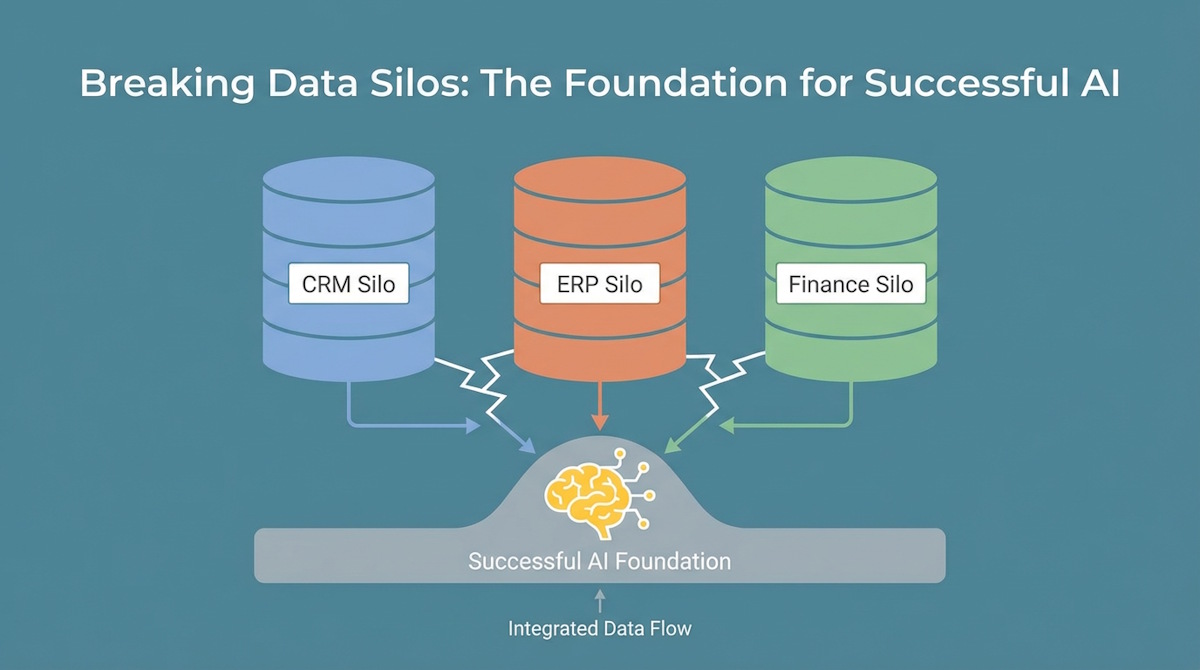
The primary reason for this high failure rate is not a lack of sophisticated algorithms or a shortage of investment. Instead, it is the persistent problem of data silos. When critical information is trapped in legacy systems that cannot communicate with one another, AI becomes an engine without fuel.
The Cost of Trapped Data
In many established UK firms, data is stored in departmental islands. The marketing team might use a modern cloud-based CRM while the finance department remains tethered to a decades-old legacy accounting suite. Because these systems were never designed to integrate, the data within them is inconsistent and fragmented.
AI requires a holistic view of the business to provide value. If an AI model is tasked with predicting customer churn but cannot access the support tickets stored in a legacy helpdesk system, its predictions will be fundamentally flawed. For many organisations, the attempt to layer AI on top of these silos only serves to amplify existing inefficiencies rather than solve them.
Why Legacy Systems Block Progress
Legacy systems are often the "technical debt" of an organisation. These platforms frequently lack the modern APIs (Application Programming Interfaces) required for real-time data flow. Consequently, data stays stagnant, requiring manual exports and "cleansing" before it can be used for analysis.
This manual intervention introduces human error and ensures that by the time the data reaches an AI model, it is already outdated. In a fast-moving market, an AI that learns from week-old data is a liability rather than an asset. Furthermore, legacy architecture often struggles with the security and governance standards required for modern AI, particularly under the scrutiny of UK data protection regulations.
How a Modern Data Strategy Fixes the Foundation
Successful AI implementation begins with a shift in strategy. Rather than starting with the AI tool, successful UK companies start by liberating their data. This modern approach involves three key steps.
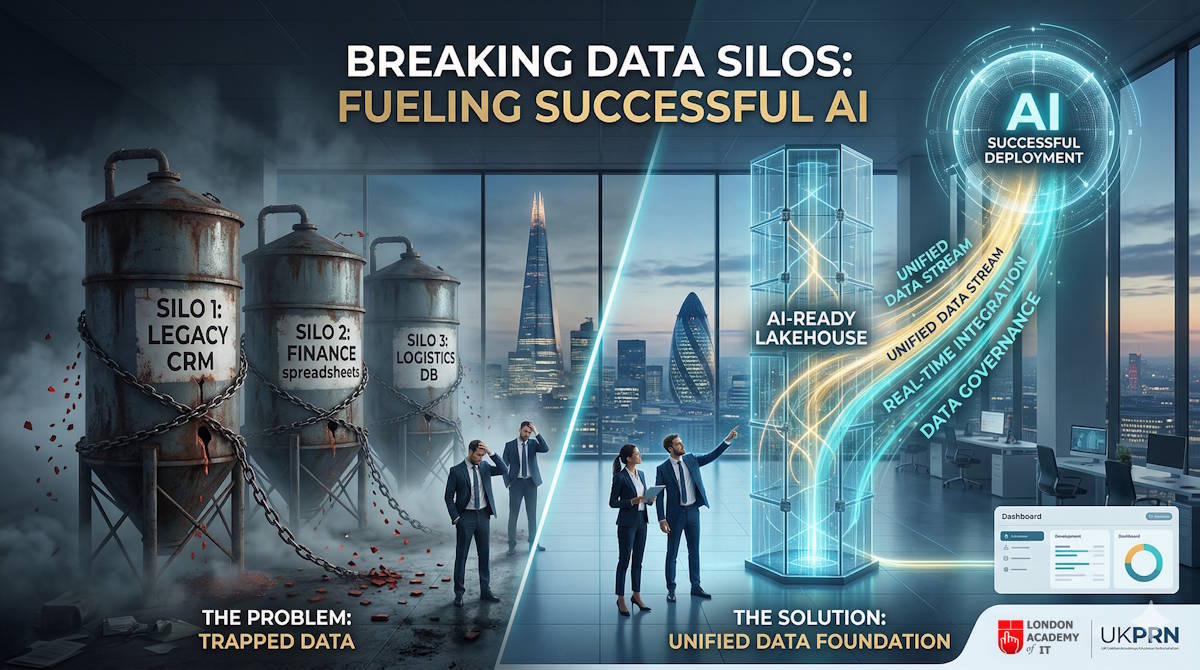
Firstly, organisations must adopt a centralised data architecture, such as a cloud data lakehouse. This allows information from every department to flow into a single, governed repository. Secondly, they must implement automated integration pipelines that replace manual data entry with real-time, synchronised streams.
Finally, a culture of data democracy must be established. Data should no longer be "owned" by a specific department but treated as a shared corporate asset. When a retail company unifies its in-store transaction data with its online browsing logs, it creates a "Single Source of Truth." Only at this point can an AI model accurately identify patterns and offer meaningful insights that drive growth.
Conclusion
AI is not a "plug-and-play" solution that can be bolted onto a fractured infrastructure. For UK businesses to thrive in the era of autonomous intelligence, they must first address the structural weaknesses of their past. By breaking down data silos and modernising their underlying data strategy, corporate leaders can turn their legacy data from a burden into the foundation of their future success.